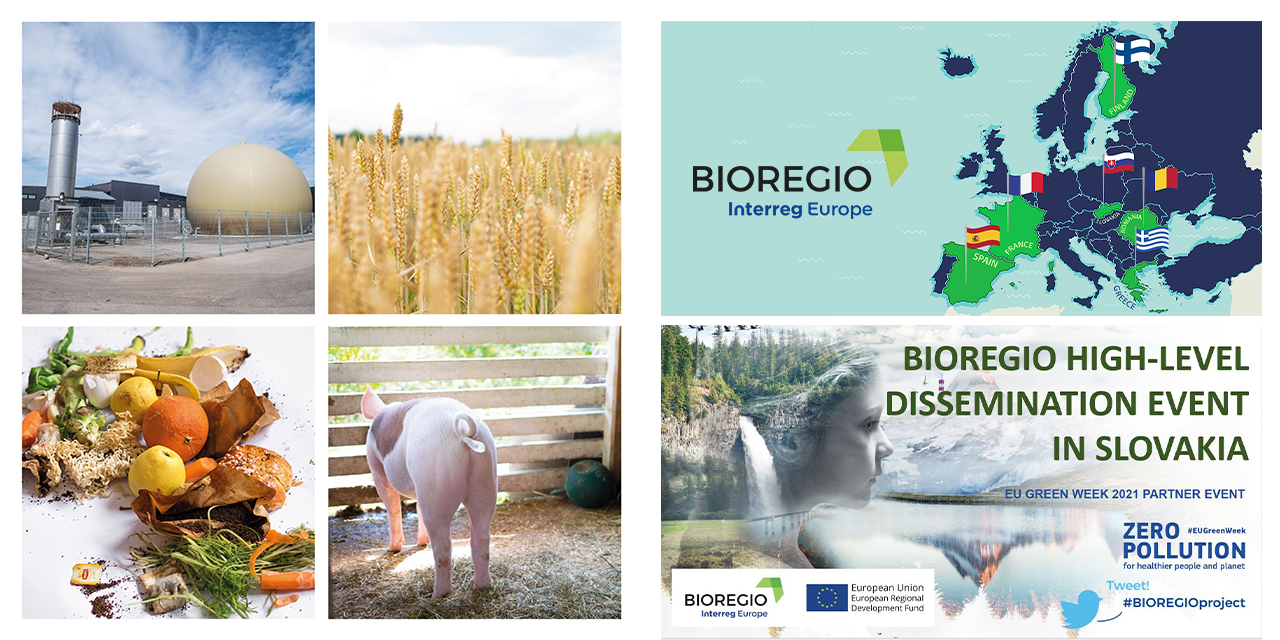
The purpose of the LAB Biofine project is to build a LAB Biofine ecosystem around innovation and development. However, it was already clear during the ideation phase of the project that the core of the ecosystem would be a concrete LAB Biofine pilot plant. (LAB University of Applied Sciences 2024.)
When the LAB Biofine project began, the first step was to design the pilot plant. During the design phase, most of the life cycle costs of the plant are resolved and critical procurements that may have long delivery times and high costs are identified.
At this stage, it is necessary to be able to clearly answer most of the following questions: What kind of LAB Biofine pilot plant would it be? What needs would emerge during the project that were not yet known in advance? What kind of pilot plant would best serve the future?
Link to the LAB Biofine presentation video
Why is a pilot plant important and what is required of it?
The LAB Biofine project is based on the set goals. The goals will be achieved with a pilot plant for which requirements were set.
The ultimate goal was to raise South Karelia’s strengths in biomass management to a new level. Materials that replace fossil-based raw materials, the utilization of side streams and the construction of new value chains require agile experimental environments. When the region already has strong research expertise in the field, large biorefinery operators and new novice but innovative biomass processors, something was needed that would transform this potential into new research areas, innovations and ultimately new products and even companies. A pilot plant serving the needs of both companies and research emerged as such a factor. It is important that companies and research are able to scale up new innovations and development ideas that work at the laboratory level to a larger scale so that they provide an idea of the potential for transition to industrial production. Such a pilot plant can also serve as a test bed for device manufacturing.
Once the overall project picture has been refined to meet the needs of the pilot plant’s future customers, the needs are ultimately transformed into final technical solutions with the plant suppliers.
What do we require from our pilot process?
Pressurized hot water extraction is the main process of the future plant. We wanted to take the familiar process to a new level, set it a sustainability challenge and use only pure water as a solvent. This means that the extraction reactor must have a temperature of 200°C and a pressure resistance of 20 bar. In addition, many requirements were placed on the extraction reactor in terms of the properties of the feed raw material, so that emptying the feed extraction residue from the reactor would not be an obstacle to performing several extraction batches during the working day, if the desired extraction time allowed.
Modularity for future flexibility
As the plans progressed, it became clear that the pilot plant should be flexible so that testing and piloting would be as extensive as possible. Modularity also offers the opportunity to develop the pilot for future needs. In practice, this means both the independent use of the process equipment itself and their combination with one or more after-treatment devices into a single process.
This need places demands on the flexibility of the plant infrastructure and the process equipment itself, which is reflected, for example, in standardized connection points within the pilot plant. In practice, this means that, for example, within the plant, every water, process fluid and steam pipe is connected to each other with the same connectors depending on the size and the transported substance. This enables the rapid creation of different process configurations according to customer needs.
What does the future of the pilot plant look like?
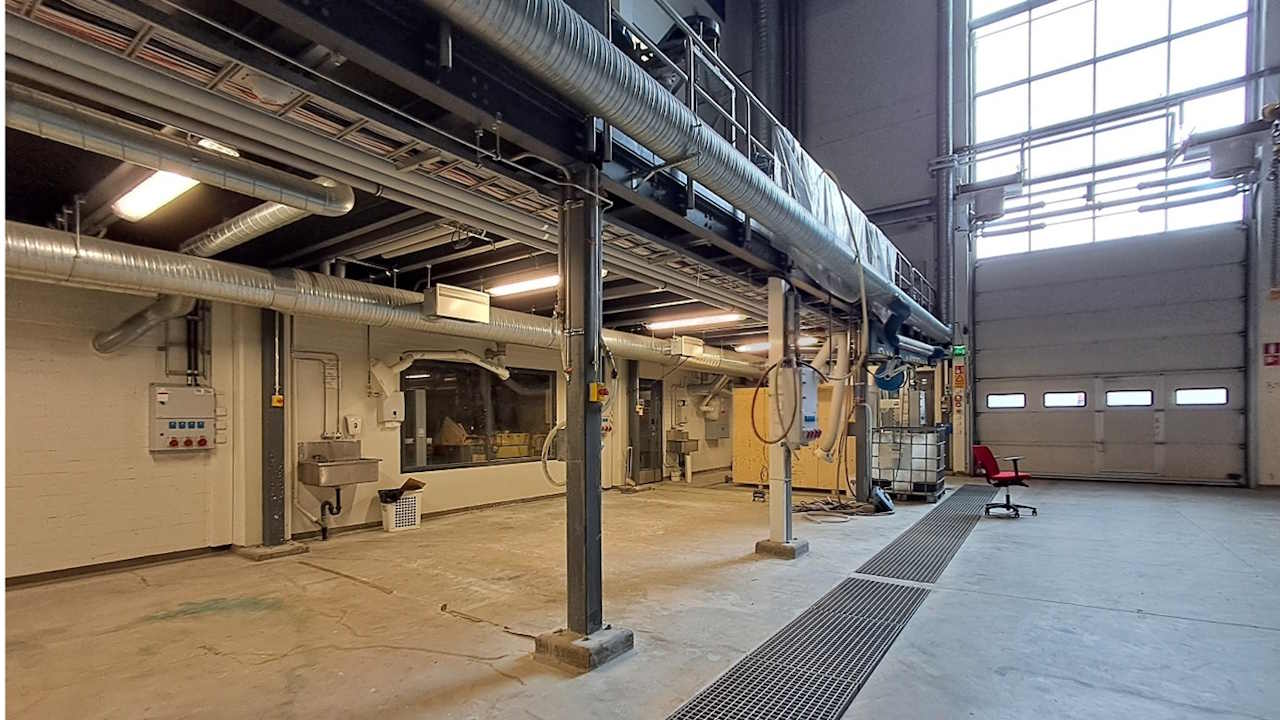
The pilot plant component is now out for tender, meaning the procurement is underway. The plant will be built in Lappeenranta on the Skinnarila campus (Image 1). In the future, the pilot plant can be expanded with new equipment components thanks to its modularity. Investigation work related to the research and testing of novel foods has also begun.
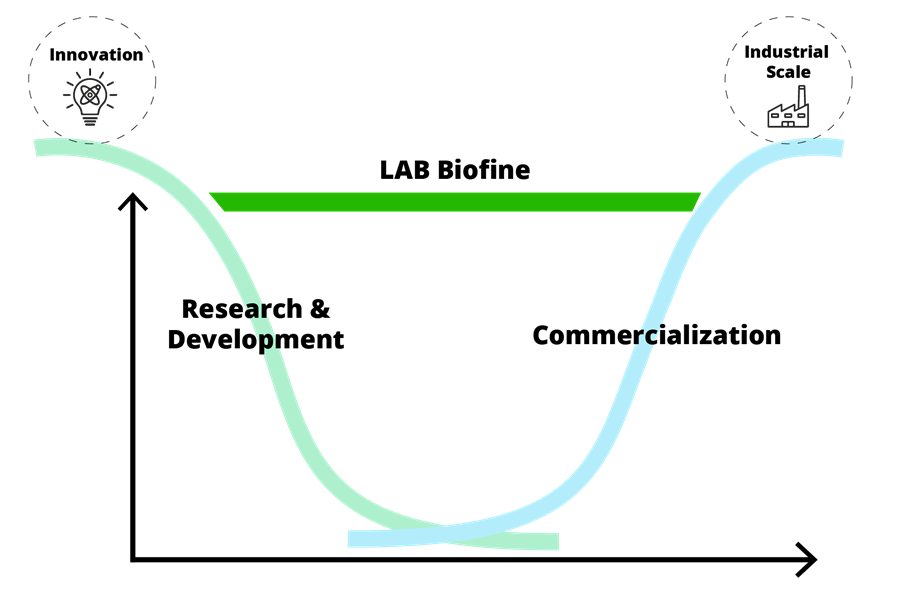
During the LAB Biofine project, the parties responsible for building the ecosystem network have brought project team members together with new partners from both the business and research worlds. A lot of useful information has been gained from these meetings. For this reason, the LAB Biofine pilot project does not stand still, but evolves with new trends in bioeconomy research and business, so that new ideas can be more effectively taken out of the “valley of death” of product development (Image 2) into new, sustainable and climate-friendly products and services that benefit us all. (LAB 2025.)
Authors
Jarkko Nummela works as a pilot laboratory manager in the LAB Biofine project implemented by the Faculty of Technology at LAB University of Applied Sciences.
Teemu Piesanen works as a development manager in the Faculty of Technology at LAB University of Applied Sciences and as a project manager in the LAB Biofine project.
References
LAB University of Applied Sciences. 2024. LAB Biofine – Kehittämishanke. Cited on 2 Jan 2026. Available at https://lab.fi/en/project/biofine
LAB University of Applied Sciences. 2025. Vihreiden liuottimien kokeiluympäristö investointihanke. Cited on 20 November 2025. Available at https://lab.fi/en/project/vihreiden-liuottimien-kokeiluymparisto-investointihanke
Links
Link 1. LAB Focus. 2026. LAB Biofine – Future hotspot for bioeconomy. YouTube video. Cited on 24 Apr 2026. Available at https://www.youtube.com/watch?v=gzIS5i3oA-Y