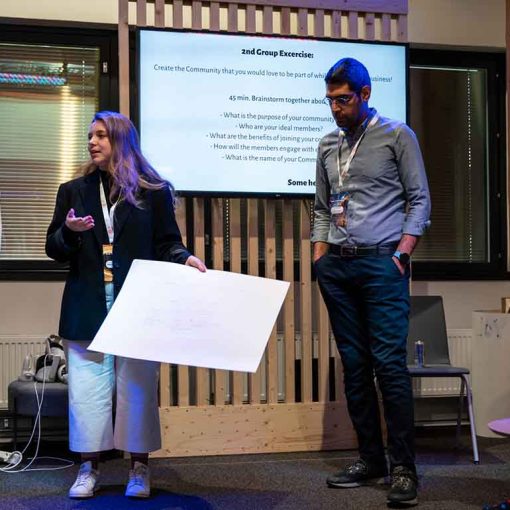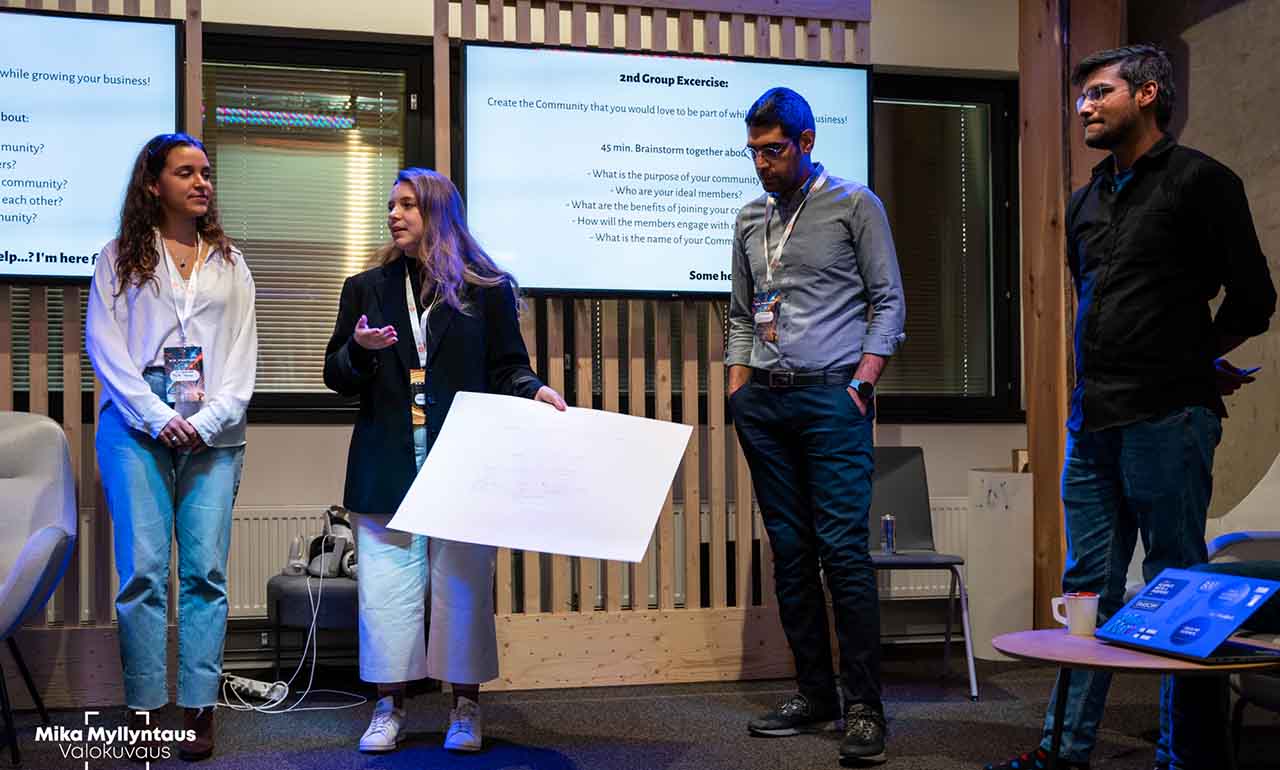
LABeko2 Project ‒ network, develop, internationalise, succeed (LAB 2025), LAB Biofine and Business Mill travelled to Mittel Hessen, Germany, visiting Marburg and Giessen on 26th – 29th October. The goal was to strengthen connections and learn more about the role of StartMiUp in the entrepreneurship ecosystem in the region, to gain insight and find new ways to collaborate internationally. One aspect of interest was the nature in which students could get involved in the ecosystem, and what kind of process the region has for introducing students to the innovation funnel.
![[Alt text: a man having a presentation in front of wooden furniture.]](https://blogit.lab.fi/labfocus/wp-content/uploads/sites/8/2025/12/567_2025_Insights-from-StartMiUp-Mittelhessen_1-1024x622.jpg)
The Ecosystem includes 3 universities operating within the cities of Marburg and Giessen, Justus-Liebig- Universität Giessen (JLU), Technische Hochshule Mittelhessen (THM), and Universität Marburg (UMR).
Introducing the StartMiUp funnel
StartMiUp presented the concept of their innovation funnel, which outlined a clear process in which the ecosystem operates from ideation to business plan bootcamp in 5 phases. The process allows for entry at any point that the student or researcher feels ready to enter, even if the student is ready to enter the funnel at the innovation festival or prototyping stage for example. The concept is simple, easy to follow, providing clear cut milestones for a start-up to make it to market entry.
![[Alt text: a pattern of innovation process with phases of problem identification to market entry and delivering.]](https://blogit.lab.fi/labfocus/wp-content/uploads/sites/8/2025/12/567_2025_Insights-from-StartMiUp-Mittelhessen_2-1024x573.jpg)
Problem identification and ideation is the base level entry point at phase 1 in the funnel, where students may attend ideation camp workshops, whether they have an idea ready or need to find an idea. The participation in such workshops rewards the students with ECTS, at LUT & LAB in comparison, this phase of the ideation process is carried out by a number of services, Business Mill and student run entrepreneurship society LUTES for example, however, to be awarded ECTS, students must participate in the Entrepreneurship Experience course where there is possibility to also engage in the ideation phase.
There is the innovation phase, in which Idea pitching, business model, and capital contest competitions take place. This can be paralleled to Idearace, and Forward competitions, held by Business Mill & LUTES. Prototyping Rallye in phase 3 is carried out by the makers space MAGIE which can be paralleled to the services provided by JHC at LUT & LAB campus. The main benefit of the makers space in comparison is in its location in the city centre of Giessen, in which they can provide open access and classes to the local public, really bringing together local network of the city and the talent within the universities.
Simplicity in communication is key – get a win on the board
The clear and simplistic nature of the StartMiUp funnel illustrates a concise overview of what the ecosystem provides. There is a great strength in a clear straightforward approach, which could be seen as a great benefit at LUT & LAB. Many times, students may be confused as to where to go first, or what are the differences between services provided by Business Milll and LUTES are for instance, where a good overview of the funnel at The Skinnarila campus could further serve to clarify these roles and services.
![[Alt text: the mentioned startups at the image are fisego, green elephant, feschd and clever sole.]](https://blogit.lab.fi/labfocus/wp-content/uploads/sites/8/2025/12/567_2025_Insights-from-StartMiUp-Mittelhessen_3-1024x579.jpg)
According to Isenberg (2010) one key step in starting an entrepreneurial revolution, involves getting a big win on the board, as each success alone can have a stimulating effect on the ecosystem. Early, visible, success helps reduce the perception of barriers and risks, overcelebrate the successes, celebrate thriving entrepreneurial ventures.
Illustrating this, THM pointed to some examples of wins on the board and practical examples of these wins could be seen, during later visits to makerspace MAGIE. This is something every entrepreneurship ecosystem should be active in, to inspire others to follow, put those wins on the board and don’t be afraid or too modest to overcelebrate them.
Author
Karl Osborne is a part-time project worker in the LABeko2 project (LAB 2025) at LAB University of Applied Sciences.

References
Isenberg, D.J. 2010. The Big Idea: How To Start an Entrepreneurial Revolution. Harvard Business Review. Cited 7 May 2025. Available at https://hbr.org/2010/06/the-big-idea-how-to-start-an-entrepreneurial-revolution
Kuhr, P. 2025. SartMiUp Innovations – & startupcampus Mittelhessen. PowerPoint. 27 Oct 2025. Giessen Germany.
LAB. 2025. LABeko2 – network, develop, internationalise, succeed. Project. LAB University of Applied Sciences. Cited 22 Jan 2025. Available at https://lab.fi/fi/projekti/labeko2-verkostoidu-kehita-kansainvalisty-menesty
Stallkamp, I. 2025 Technische Hochschule Mittelhessen Talents.Technology.Future. PowerPoint. 27 Oct 2025. Giessen Germany.