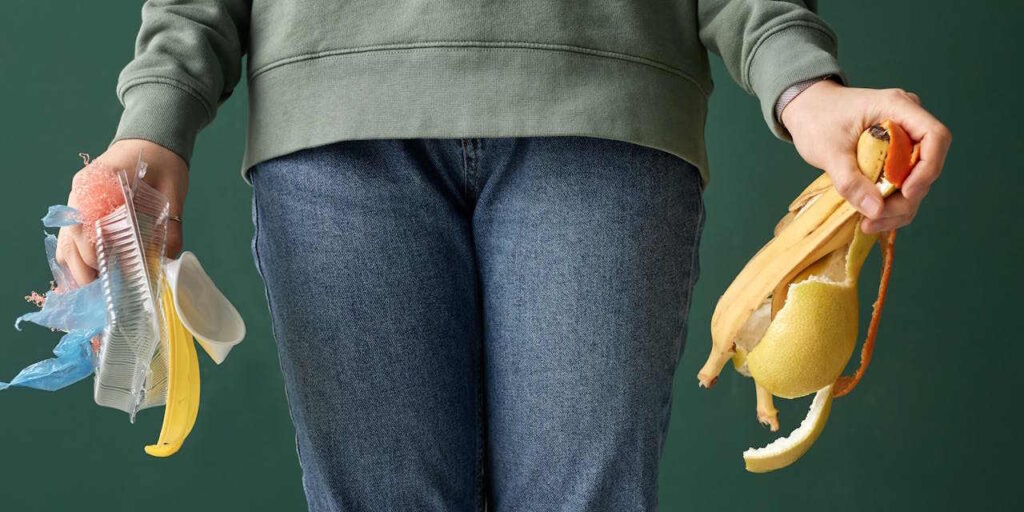
In 2023, EU residents generated 511 kg of municipal waste per person, but only 48% was recycled (Eurostat 2023). Effective recycling starts at home, where proper sorting, especially separating biowaste, allows recycling systems to function well and keeps valuable resources in circulation. However, good sorting requires clear guidance and easy‑to‑use infrastructure; when instructions are unclear or inconvenient, even motivated citizens may struggle to sort correctly. (Cristóbal et al. 2022, 7–11.)
The CITISYSTEM Interreg Europe project supports cities in developing systemic, biobased circular economy solutions, emphasising the role of cities in achieving effective biowaste utilisation and nutrient circulation. The project stresses that systemic innovations cannot succeed without active citizen engagement and awareness raising. (Interreg Europe 2023.)
On 20 January 2026, the 6th CITISYSTEM webinar was held focusing on Speeding up the Separate Biowaste Collection and Processing. Kaisa Sibelius (2026) from Forum Virium Helsinki presented an inspiring case showing how inclusive learning and stakeholder engagement can significantly improve recycling skills across diverse population groups.
Recycling Master online course
The Recycling Master course was developed together with the City of Helsinki’s Rehabilitative Work Activities and Disability Services in TREASoURcE project. Although various kinds of supporting information already exist, none of them meet the needs of all user groups. The course teaches practical sorting and recycling skills to people who are often overlooked when traditional recycling guidelines are created. It is designed for individuals who benefit from plain‑language explanations and hands‑on or visual learning, rather than long written texts. (Sibelius 2026.)
The course aims to strengthen the recycling habits of clients in the City of Helsinki’s Rehabilitative Work Activities and Disability Services. At the same time, it strengthens their participation in society and helps develop their digital skills. (Sibelius 2026.)
The course is divided in four days, with four 45-minutes long sessions per day. In addition to biowaste, the covered topics include plastics, metal, textiles, electronics, hazardous waste, etc. The final session of each day is finished with a short test, which could be repeated if needed. An AI‑based avatar acts as a guide throughout the course, making the learning experience more engaging and accessible. The course content was co‑created together with the clients and personnel of Rehabilitative Work Activities and Disability Services, whose active participation made the process both meaningful and inspiring. (Sibelius 2026.)
Existing Replications
The course has been designed so that it can be easily adapted and used in different places. In Norway, the course was adjusted for young adults (18+) moving into their first homes. They received simple, practical guidance to help them build good waste‑sorting habits, specifically for biowaste. The materials were created together with the local waste management company and other experts. In Estonia, the course was aimed at students in grades 7–9 (ages 13–16). More than 200 schools received a nine‑chapter course that mixes circular economy topics with quizzes and class discussions. Local waste experts helped adapt the content, and a friendly school‑aged avatar guides students through the course. Teachers lead the learning, so it includes homework, explanation‑based quizzes, and discussion questions. (Sibelius 2026.)
Summary
The Recycling Master course demonstrates how accessible, narrative‑driven digital education can improve recycling skills among diverse learners, including vulnerable groups excluded from traditional communication. Replications in Norway and Estonia demonstrate the course’s adaptability and highlight the importance of involving end users as well as local waste‑management and pedagogical experts.
CITISYSTEM – Supporting cities in sustainable biobased systemic change is an Interreg Europe co-funded project led by LAB University of Applied Sciences, Finland. The CITISYSTEM partnership consists of seven partners from Finland (2 partners), Slovakia, Slovenia, Belgium, Greece, and Spain.
Link to the CITISYSTEM website
References
Cameron, J. M. D. 2021. Person Holding Plastic and Organic Trash in Hands. Pexels. Cited 19 Feb 2026. Available at https://www.pexels.com/photo/person-holding-plastic-and-organic-trash-in-hands-6994745/
Cristóbal, J., Pierri, E., Antonopoulos, I., Bruns, H., Foster, G. & Gaudillat, P. 2022. Separate collection of municipal waste: citizens’ involvement and behavioural aspects. Luxembourg: Publications Office of the European Union. Cited 18 Feb 2026. Available at https://doi:10.2760/665482
Eurostat. 2023. Municipal waste statistics. European Commission. Cited 19 Feb 2026. Available at https://ec.europa.eu/eurostat/statistics-explained/index.php?title=Municipal_waste_statistics#:~:text=Highlights,recycling%20and%20composting)%20in%202023.&text=Municipal%20waste%20refers%20to%20waste,they%20have%20a%20similar%20composition.
Interreg Europe. 2023. CITISYSTEM – Supporting cities in sustainable biobased systemic change. Cited 18 Feb 2026. Available at https://www.interregeurope.eu/citisystem
Sibelius, K. 2026. Supporting Recycling at the Citizen Level – Practical Pathways to Impact. Presentation given at the CITISYSTEM Thematic Webinar 6 on 20 Jan 2026, online.
Links
Link 1. Interreg Europe. 2023. Project Summary. CITISYSTEM. Cited 18 Feb 2026. Available at https://www.interregeurope.eu/citisystem