Nowadays, climate policy has moved from a peripheral consideration to a crucial driver factor in industrial competitiveness. The European Commission (2021) and the European Union (2023) show that, within the European Union, carbon-related regulations such as Carbon Border Adjustment Mechanism ─ CBAM ─ have embedded carbon costs into trade that has caused transformational environmental regulation into a market-shaping force.
As a result, firms must treat emissions as a production cost alongside labor, energy, and raw materials in their performance and strategic decision-making. This transformation is critical in carbon-intensive industries such as steel, aluminum, and cement. In these industries, small changes in emissions intensity can significantly affect market share and price competitiveness. Böhringer et al. (2017) argue that, as a result, competitiveness is no longer defined only by cost efficiency, but by carbon efficiency.
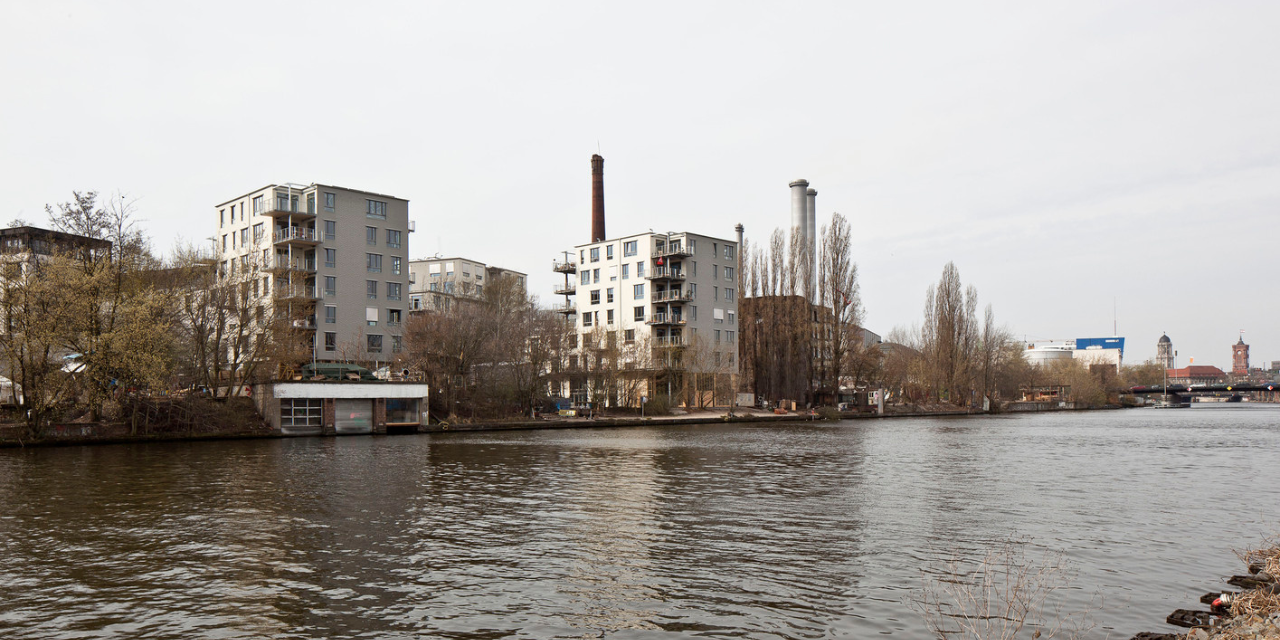
![[Alt text: A view of polluting factors at a lake shore.]](https://blogit.lab.fi/labfocus/wp-content/uploads/sites/8/2026/04/154_2026_Integrating-climate-policy-into-business-strategy-1024x607.jpg)
Carbon Leakage and Industrial Distortion
For a long time, carbon leakage undermined climate policy effectiveness. Mehling et al. (2019) explain that firms under government pressure shift production to regions with weaker carbon-related regulations to reduce local emissions, however, the fact is that global emissions remain unchanged, the outcome is only creating distortions in cost and investment patterns. Firms under strict carbon pricing face higher costs than competitors in less regulated markets. The Ministry of Economic Affairs and Employment (2022) shows that this affects capital allocation and weakens domestic competitiveness. CBAM addresses this imbalance by applying equivalent carbon costs to imports, aligning competitive conditions and reducing relocation incentives.
Trade Transformation Through CBAM
CBAM introduces a principle that carbon costs should be equivalent regardless of production location. The European Commission (2021) and the European Union (2023) explain that imported goods are priced in line with the EU Emissions Trading System. This mechanism is extending EU climate policy into global trade. Firms require accurate measurement and reporting of embedded emissions in their production. Emissions data becomes a prerequisite for market access rather than a secondary requirement. The European Commission – DG TAXUD (2023) and Mehling et al. (2019) show that without reliable monitoring and verification, firms face compliance risks and financial penalties.
Industrial Implications
CBAM reshapes industry in three aspects. Cost structures are redefined as carbon costs are internalized. The European Environment Agency (2024) shows that in metal industries, carbon costs per tonne create pressure on margins and pricing strategies. In addition, supply chains become more carbon dependent as Statistics Finland (2025) indicate that firms must record emissions across tiers. This will increase coordination complexity and potentially excluding non-compliant suppliers. Data becomes a strategic asset, as emissions data is essential for compliance, cost calculation, and decision-making. The European Commission (2023) emphasizes that firms must invest in monitoring, reporting, and verification to remain competitive.
Evidence from Finnish Metal Industry
CBAM in its implementing phase introduces administrative and financial impacts. Reporting obligations and compliance are estimated at €70,000 to €120,000 annually (European Commission 2023; Sadeghi 2026). Considering the number of firms, this policy creates significant costs across industries. Trade indicators show fluctuations in Finnish metal exports, including declines in value and volume during the CBAM transition phase. While multiple factors influence trade performance, these patterns suggest increased regulatory pressure and reduced pricing flexibility (Finnish Customs 2025).
Conclusion
CBAM is not merely a compliance requirement but a strategic transformation. CBAM has been described as a non-tariff instrument influencing trade through administrative and data requirements rather than direct tariffs in international markets. Institutional pressures drive firms to adapt processes, adopt emissions monitoring, and align with regulatory expectations across their operations. At the same time, environmental regulation can stimulate innovation and efficiency, enhancing competitiveness in the long term. Firms that develop strong emissions management and low-carbon production gain advantages in this evolving and increasingly regulated market environment.
Authors
Sepehr Sadeghi is bachelor’s student, Bachelor of Business Administration (BBA), Faculty of Business and Hospitality Management, LAB University of Applied Sciences, Lappeenranta.
Sajal Kabiraj, PhD, works as Principal lecturer at the Faculty of Business and Hospitality Management, LAB University of Applied Sciences, Lahti.
References
Böhringer, C., Carbone, J. & Rutherford, T. 2017. Embodied carbon tariffs. The Scandinavian Journal of Economics, 119(1), 183–210.
European Commission. 2021. Proposal for a Regulation establishing a carbon border adjustment mechanism. Brussels: European Commission.
European Commission. 2023. CBAM transitional phase reporting requirements and compliance guidelines. Brussels: European Commission.
European Commission – DG TAXUD. 2023. CBAM transitional phase guidance and default values. Brussels: European Commission.
European Environment Agency. 2024. Greenhouse gas emission intensity in European industry. Copenhagen: European Environment Agency.
European Union. 2023. Regulation (EU) 2023/956 establishing a carbon border adjustment mechanism. Official Journal of the European Union.
Finnish Customs. 2025. Foreign trade statistics and CBAM-related trade developments. Helsinki: Finnish Customs.
Mehling, M., van Asselt, H., Das, K., Droege, S. & Verkuijl, C. 2019. Designing border carbon adjustments for enhanced climate action. American Journal of International Law, 113(3), 433–481.
Ministry of Economic Affairs and Employment. 2022. Industrial policy and climate transition in Finland. Helsinki: Government of Finland.
Sadeghi, S. 2026. Impact of the EU Carbon Border Adjustment Mechanism (CBAM) on Finnish metal exports. Bachelor’s thesis. LAB University of Applied Sciences. Cited 26 Mar 2026. Available at https://urn.fi/URN:NBN:fi:amk-202603254947
Statistics Finland. 2025. Official statistics of Finland: Foreign trade. Helsinki: Statistics Finland.
Żerdzicki, J. 2025. Industrial complex with smoke billowing from stacks. Unsplash. Cited 26 Mar 2026. Available at https://unsplash.com/photos/industrial-complex-with-smoke-billowing-from-stacks-mkNProC1yZg