The Järviwiki project offered environmental engineering students valuable internship opportunities and hands‑on experience in the demonstration activities of the Europe‑wide FutureLakes project. Through this collaboration, students contributed to real‑world lake monitoring and restoration work while developing practical skills for their future careers.
FutureLakes – Advancing Lake Monitoring Across Europe
The Finnish Environment Institute (Syke) works closely with LAB University of Applied Sciences in environmental technology degree programs, together with the Vesijärvi Foundation. Syke also participates in the FutureLakes project as an official partner.
FutureLakes aims to protect and restore Europe’s lakes by improving how they are monitored, managed, and governed. The project pilots innovative monitoring and restoration solutions both within lakes and across their surrounding catchments. By combining nature‑based solutions, circular economy thinking, and biodiversity‑focused approaches, FutureLakes introduces new methods for sustainable lake-basin management. These solutions are tested in six large European lakes (Demo Basins) and supported by inclusive governance, active public engagement, policy development, and innovative financing models (Future Lakes 2026.).
Special Student Action Area 2026: Vesijärvi and Lahti Region Demo Basins
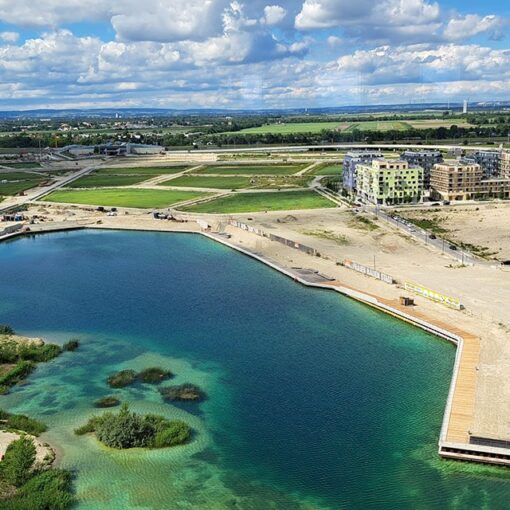
Lake Vesijärvi and other lakes of the Päijät-Häme region are among the selected Demo Basins. Vesijärvi Foundation contributes local expertise and practical insights to this European-wide initiative and helps shape future approaches to lake protection and monitoring. The foundation aims to be a visible leader in water management (Vesijärvi Foundation 2026). In May 2026, the Water Watch campaign was launched (Järviwiki 2026). The campaign encourages citizens to record observations on blue‑green algal blooms (Potharaju et al. 2025, 191; Tigli et al. 2025, 7), water transparency which is also called Secchi depth (Donini & Piccolroaz 2025, 358), and littering across Päijät‑Häme during the summer of 2026. In practice, the students act as water watchers, regularly observing lake conditions and reporting their findings to the Järviwiki database as well as documenting them in a comprehensive project report.
From Shore to Report: A Water Watcher’s Day
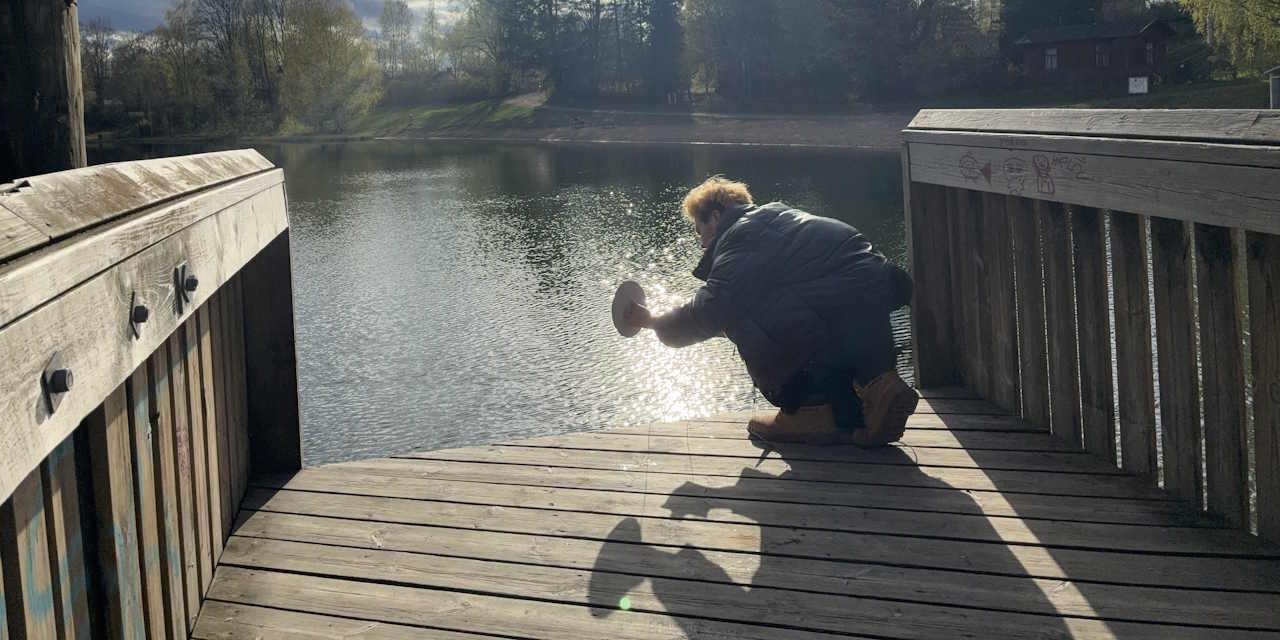
A routine monitoring day at the lake shore focuses on observing and documenting the condition of the water through simple measurements and visual observations. Water temperature is measured several times near the surface using a thermometer to ensure reliable results. Water transparency is assessed from a pier using a Secchi disk. The disk is lowered slowly into the water, and the depth at which it disappears is recorded to indicate water clarity.
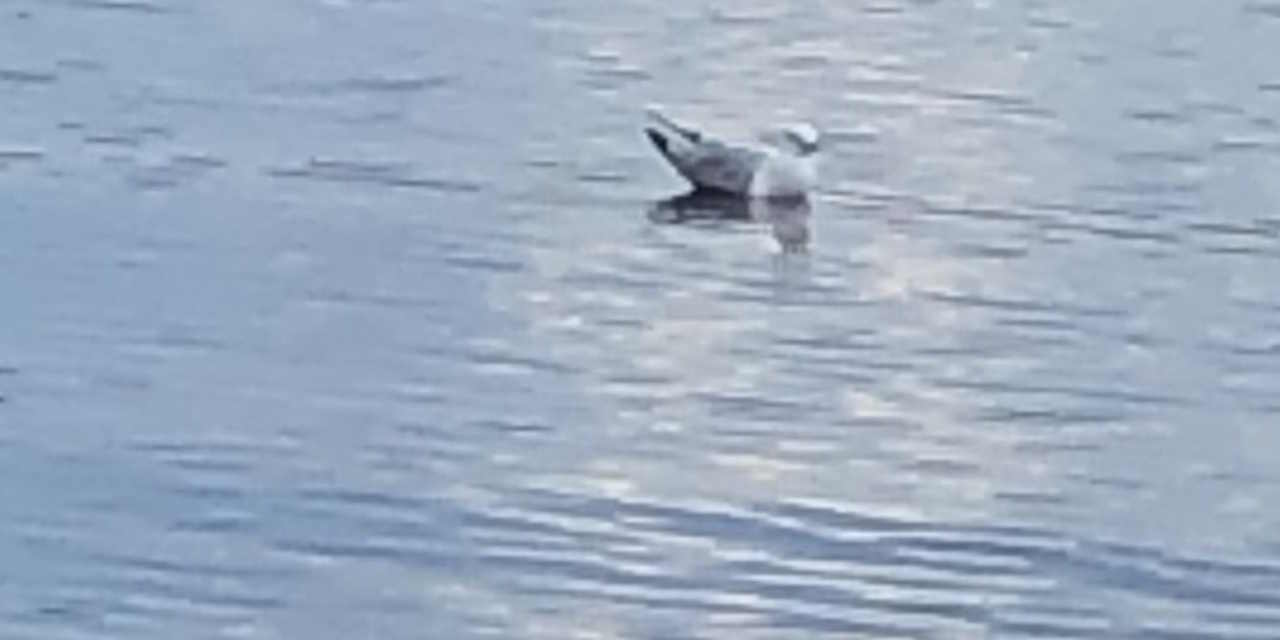
Along the shoreline, attention is given to suspended particulates, possible invasive species, and visible traces of algae. Birds and insects are also observed, providing additional insight into the condition of the surrounding ecosystem. Photographs are taken and notes are recorded throughout the process. These observations are later organised into a report and submitted to the Järviwiki database as part of the project.
Each monitoring day reinforces the importance of regular lake observations in supporting water protection and raising environmental awareness.
Expanding Impact: Student Monitoring Across Finland
In summer 2026, approximately 30 environmental engineering students from LAB University of Applied Sciences will participate in Järviwiki water monitoring activities across Finland. Most observations will be conducted at inland lakes, while some students will operate in coastal environments, depending on their geographical location.
The project has generated considerable interest among students, largely due to its flexible and independent structure combined with its practical relevance. It provides an opportunity to engage in applied environmental monitoring while contributing to a broader RDI initiative. Through their role as water watchers, students produce locally relevant data for the Järviwiki platform and support the objectives of the FutureLakes project.
At the same time, this form of student-led monitoring represents a concrete contribution to local communities by enhancing environmental awareness and supporting evidence-based water management. It also illustrates the value of integrating higher education with real-world environmental challenges, promoting both professional competence and societal impact.
Authors
Nguyen Huy is a bachelor’s degree student in the Sustainable Solutions Engineering programme at LAB University of Applied Sciences.
Anne-Marie Tuomala is a senior lecturer in the Faculty of Technology at LAB University of Applied Sciences and a tutor teacher in the Sustainable Solutions Engineering programme.
References
Donini, G. & Piccolroaz, S. 2025. DISCO: A low-cost device-instrumented Secchi disk for water. Limnology and Oceanography: Methods. Vol. 23 (5), 346–361. Cited 13 May 2026. Available at https://doi.org/10.1002/lom3.10684
Future Lakes. 2026. Project website. Cited 13 May 2026. Available at https://futurelakes.eu/
Järviwiki.2026. Online platform for lakes and marine areas. Cited 13 May 2026. Available at https://www.jarviwiki.fi/wiki/Vesivahdit_2026
Potharaju, R., Aruna, M. & Prasado Rao, K. L. V. 2025. Eutrophication Dynamics in Freshwater Lake: Nutrient Loading, Ecological Impacts and Mitigation Strategies. Asian Journal of Research in Botany. Vol. 8 (1), 190–202. Cited 13 May 2026. Available at https://doi.org/10.9734/ajrib/2025/v8i1254
Tigli, M., Bak, M. P., Janse, J. H., Strokal, M. & Janssen, A. B. G. 2025. The future of algal blooms in lakes globally is in our hands. Water Research. Vol. 268, Part A, 1–10. Cited 13 May 2026. Available at https://doi.org/10.1016/j.watres.2024.122533
Vesijärvi Foundation. 2026. Vesijärvi Foundation – A visible leader in water management. Cited 13 May 2026. Available at https://vesijarvi.fi/en/