Walk through any European city and you will see bins filled with biowaste awaiting collection. Food scraps, coffee grounds and garden waste are often treated as waste despite containing valuable nutrients, organic matter and energy. As cities seek more sustainable resource management, recovering value from biowaste has become a priority. The CITISYSTEM project explores how circular bioeconomy approaches can transform these waste streams into valuable resources.
From linear disposal to circular value
The circular bioeconomy combines circular economy principles with renewable biological resources to reduce waste, keep materials in use and regenerate natural systems (Ellen MacArthur Foundation 2026; European Commission 2026a). Rather than disposing of biowaste, it seeks to maximise its value.
However, bio-based materials are not automatically sustainable. Biomass production still requires land, water and energy and may affect biodiversity and food security. Therefore, circular bioeconomy solutions should prioritise waste prevention, efficient biomass use, and nutrient and carbon recycling from unavoidable biowaste. (Muscat et al. 2021, 561–564.)
Why cities are well placed to lead this change
Cities are well placed to drive circular bioeconomy transitions through waste management, land use planning, public procurement and stakeholder coordination, contributing to improving resource efficiency and local nutrient cycles (European Commission 2026b; European Environment Agency 2020). Biowaste includes garden, park, food and kitchen waste from households, restaurants and retailers (European Commission 2026b).
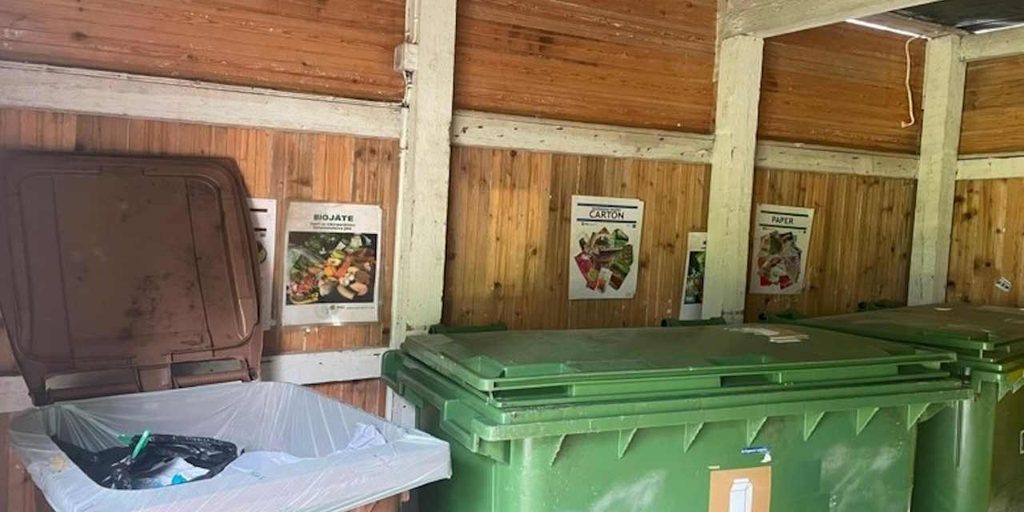
Biowaste can be treated through composting or anaerobic digestion. Composting produces compost that can improve soil quality, while anaerobic digestion produces biogas and digestate that can be used as renewable energy and nutrient-rich soil amendments. These are the two most commonly used technologies for managing biowaste in Europe (European Environment Agency 2020, 23–24). Both processes depend on effective source separation to prevent contamination and ensure high-quality outputs (European Environment Agency 2020, 19). Although many cities collect biowaste separately, the main challenge is ensuring high-quality source separation and the sustainable use of recovered materials (European Environment Agency 2020, 19).
Food and kitchen waste is the largest component of urban biowaste, making prevention more effective than treatment. Around 1.05 billion tons of food were wasted globally in 2022 (UNEP 2024, 46). Municipalities can reduce food waste through awareness campaigns, food sharing initiatives, improved procurement and guidance on meal planning and food storage.
Systemic change requires more than one technology
A composting facility or biogas plant alone cannot create a circular city. Effective systems require coordinated collection, supportive policies, infrastructure, markets for recovered products and proper biowaste sorting. Cross-sector collaboration links urban biowaste with nutrient recycling and renewable energy. Despite EU policy support, success depends on local planning, stakeholder cooperation and continuous learning. (European Commission 2026b; European Environment Agency 2020.)
CITISYSTEM as a learning space
CITISYSTEM is an Interreg Europe project coordinated by LAB University of Applied Sciences. Through the exchange of good practices, it supports cities in developing sustainable bio-based systems, focusing on biowaste collection, nutrient circulation, renewable energy, and stakeholder collaboration (Interreg Europe 2025). Experiences from the project show that cities achieve the greatest progress when they view biowaste as a valuable resource rather than a waste management problem, supported by long-term cooperation and knowledge sharing.
Concluding thoughts
Urban biowaste has substantial environmental and economic value. Unlocking this potential requires waste prevention, effective source separation, and strong collaboration among multiple stakeholders. Sustainable urban development therefore depends not only on technological solutions but also on systemic resource management and long-term cooperation.
Authors
Ritu Chhetri is a Sustainable Construction Technology student at LAB University of Applied Sciences participating in the CITISYSTEM project through the LAB REDI internship programme.
Katerina Medkova is an RDI Specialist at LAB University of Applied Sciences and CITISYSTEM Project Manager. CITISYSTEM – Supporting cities in sustainable biobased systemic change is an Interreg Europe co-funded project led by LAB University of Applied Sciences, Finland. The CITISYSTEM partnership consists of seven partners from Finland (2 partners), Slovakia, Slovenia, Belgium, Greece, and Spain.
References
Ellen MacArthur Foundation. 2026. What is the meaning of a circular economy and what are the main principles? Cowes: Ellen MacArthur Foundation. Cited 4 Jul 2026. Available at https://www.ellenmacarthurfoundation.org/topics/circular-economy-introduction/overview
European Commission. 2026a. Bioeconomy Strategy. Brussels: European Commission. Cited 13 Jul 2026. Available at https://environment.ec.europa.eu/strategy/bioeconomy-strategy_en
European Commission. 2026b. Circular Economy. Brussels: European Commission. Cited 21 Jun 2026. Available at https://environment.ec.europa.eu/strategy/circular-economy_en
European Environment Agency. 2020. Bio-waste in Europe – turning challenges into opportunities. EEA Report No 04/2020. Luxembourg: Publications Office of the European Union. Cited 21 Jun 2026. Available at https://doi.org/10.2800/630938
Interreg Europe. 2025. CITISYSTEM – Supporting Cities in Sustainable Biobased Systemic Change. Cited 21 Jun 2026. Available at https://www.interregeurope.eu/citisystem
Muscat, A., de Olde, E. M., Ripoll-Bosch, R., van Zanten, H. H. E., Metze, T. A. P., Termeer, C. J. A. M., van Ittersum, M. K. & de Boer, I. J. M. 2021. Principles, drivers and opportunities of a circular bioeconomy. Nature Food. Vol. 2, 561–566. Cited 21 Jun 2026. Available at https://doi.org/10.1038/s43016-021-00340-7
UNEP. 2024. Food Waste Index Report 2024. Think Eat Save: Tracking Progress to Halve Global Food Waste. United Nations Environment Programme. Cited 21 Jun 2026. Available at https://wedocs.unep.org/items/dbe2cd4c-8384-4636-8359-5847f42b9711