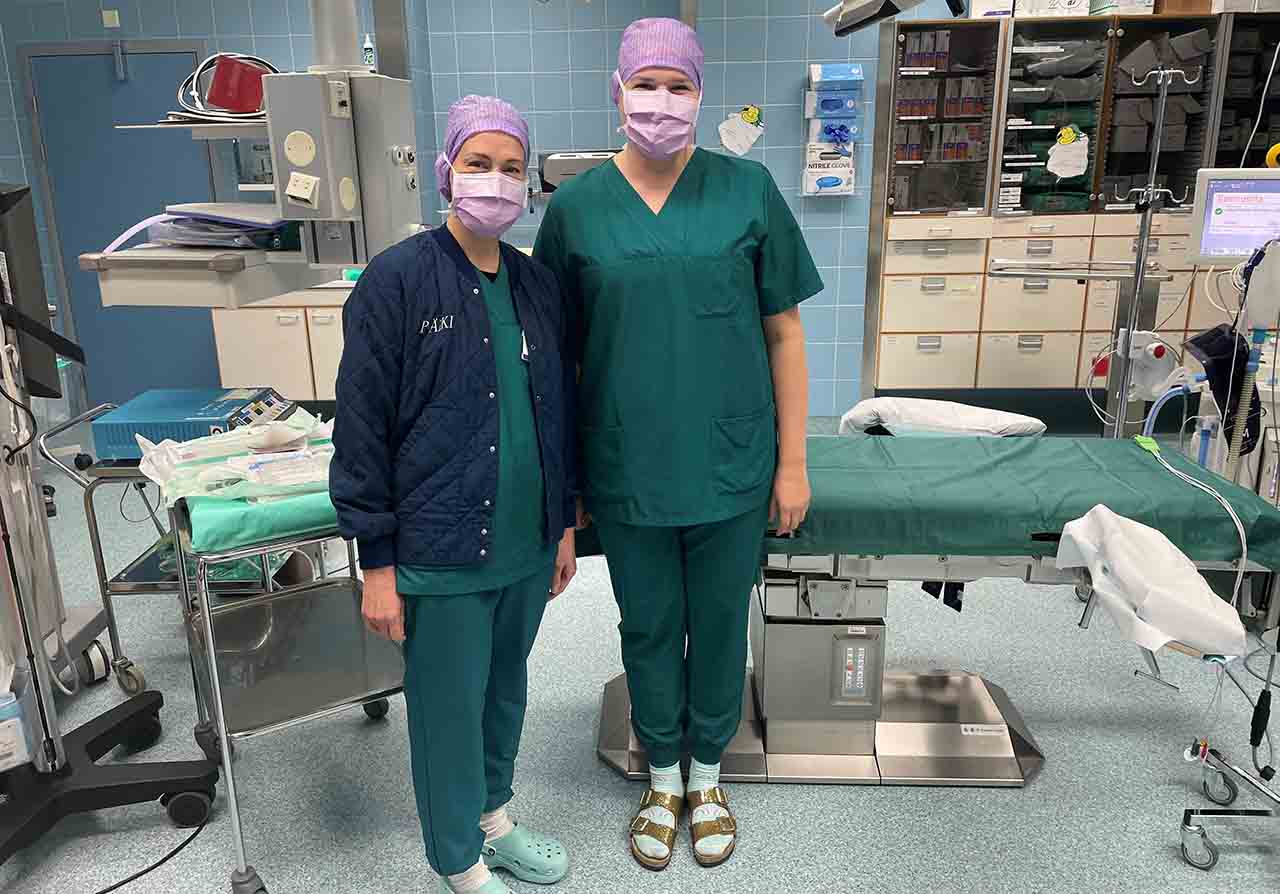
As part of the I3-INSHAPE project, LAB University of Applied Sciences has been piloting the Onasport device – developed by Spanish health technology company Onalabs – across different conditions and user groups. The pilots began last summer in Lahti in collaboration with Lahden Ahkera (Laine 2025) and continued this winter in Kilpisjärvi.
What sets the Onasport apart from other wearable wellness devices is its ability to measure e.g. lactate levels, fluid balance, and electrolyte concentration during exercise – all through sweat analysis. This offers a practical new way to track physiological changes and respond to them before performance begins to decline. (Onalabs 2026.)
LAB’s pilots have focused primarily on user and coach experience, with particular interest in how geography, climate, culture and exercise habits shape the way people interact with the device. Needs and expectations can differ considerably when moving from the warmth of the Mediterranean to the proximity of the Arctic Ocean. The latest Onasport pilot took the Spanish-made monitor all the way to the wilderness of Finnish Lapland.
The Onasport Monitor Put to the Test in Kilpisjärvi’s Winter Conditions
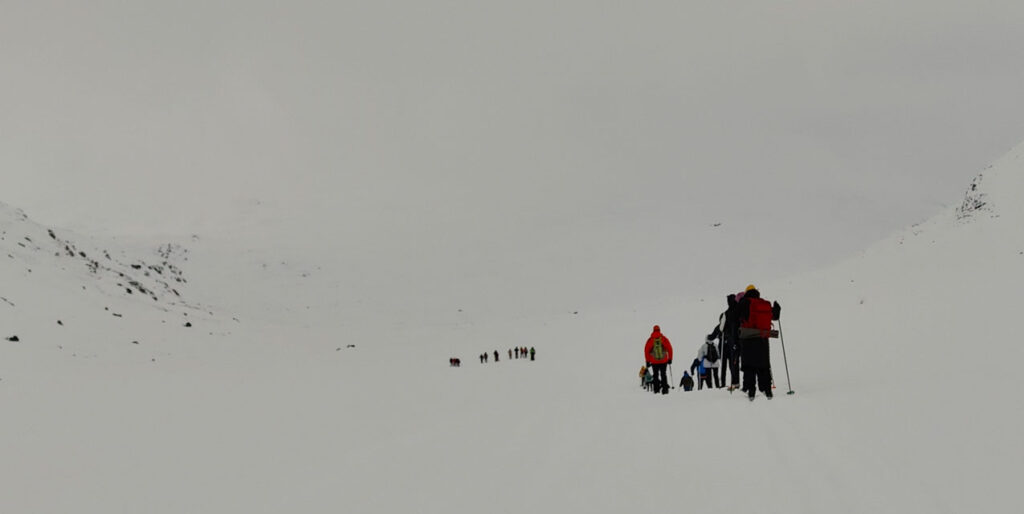
The winter testing took place during the Tiirismaan Latu skiing week in Kilpisjärvi in week 15, when the fells were still deep in snow. Seven participants took part in testing.
Until now, the Onasport had been used mainly in warmer settings, and in activities such as running and cycling. Testing it during long fell skiing sessions in variable winter conditions was therefore new territory.
The monitor was worn around the chest and calibrated using each participant’s background data: age, height, weight, gender and heart rate. From this, the device’s algorithms estimated e.g. heart rate, sweat loss, sweat rate, sodium loss and sweat inferred lactate, with results displayed in a companion application on the user’s phone.
One practical finding emerged quickly: the monitor was easiest to put on indoors before heading out. With multiple clothing layers – from merino wool base layers to a windproof shell – fitting the device in freezing outdoor temperatures would have been awkward. Participants also kept it on until returning inside.
The team encountered connectivity challenges on the route, as mobile network coverage was not consistently available across all sections. This affected data transfer and application functionality in the moment, though everything returned to normal once a connection was restored. It is a relevant consideration for anyone planning to use the device in remote outdoor settings where network access cannot be assumed.
The results accurately reflected the nature of each skiing day. On longer, more relaxed outings, load stayed comfortably within the base endurance zone – as expected for multi-hour ski tours. Steeper climbs and end-of-day sprints back to the lodge showed up clearly in heart rate and other readings.
Participants found sweating and sodium loss data especially valuable. On long trips, water alone is not enough — the body also needs energy and electrolytes. The device served as a concrete reminder of the importance of fueling and hydrating before, during, and after exercise.
The device was easy to use, and all participants got to grips with it through the provided instructions. Two areas were flagged for development: the application is currently available only in English, and some of the physiological terminology may be unfamiliar to users without a sports science background.
Overall, the testing confirmed that the Onasport is well suited to evaluating load, recovery and physiological state in individual training or assessment sessions. The fell conditions in Kilpisjärvi provided genuinely valuable development insight from an environment very different from the device’s usual contexts.
Towards New Sports and User Groups
LAB’s pilots with the Onasport will continue throughout the year. Potential new testing grounds include lacrosse and football, and there is particular interest in exploring how the monitor and application can support coaches in their work. The collaboration between LAB and Onalabs is part of the EU-funded I3-INSHAPE project, which develops health and wellbeing innovations across Europe (EPSI 2026).
The translation and language editing of this text were supported by Claude AI.
Authors:
Katri Angelin, Master of Healthcare, serves as Project Manager in the project
Hanna Laine, Master of Health Sciences, BBA, serves as Expert in the project


References
EPSI. 2026. I3-INSHAPE. Accessed 27 April 2026. Available at https://old.epsi.eu/project/inshape/
Laine, H. 2025. Sweat Tells a Story – INSHAPE Project Pilots Wearable Sensor Technology with Finnish Athletes. Accessed 27 April 2026. Available at Sweat Tells a Story – INSHAPE Project Pilots Wearable Sensor Technology with Finnish Athletes – LAB Focus
Onalabs. 2026. ONASPORT. Accessed 27 April 2026. Available at https://onalabs.com/en/onasport